
The nearest stop
The phone's location shows the surrounding stops and the buses arriving, on the map.

 Português Choose language:
 Español Choose language:
 English
Merus Tracker supports agencies and entities that need to relate rules, service, trips and execution records in order to oversee, check or report.
Lines, schedules and trips stop depending on accounts and start having a record.
From the rule to the calculated amount, every step can be consulted and justified.
What the contract promises can also reach those waiting for the bus.
Merus helps each party keep theirs: who waits at the stop, who decides, who checks, who pays and who operates.
 For those waiting at the stop
 For those who decide
 For those who check
 For those who pay
 For those who operate
With Merus, the city shows the predicted arrival of every bus. Riders plan when to leave home, wait less at the stop and gain time for the rest of life.







The phone's location shows the surrounding stops and the buses arriving, on the map.
All the stop's lines, sorted by arrival, with the status of each.
The bus stop by stop, with an alert when it is arriving.
Illustration. The prediction depends on the equipment, connectivity and configuration of each city.
In 2026, the press of a city in the interior of Rio de Janeiro state pointed to Merus passenger lookup three times: at launch, at the expansion and on days of delay.

In Nova Friburgo, passengers reported delays and difficulties getting around. The operator pointed to traffic congestion as one of the main causes of delays on the city's lines.
Understand the context
The Merus lookup began to show lines, bus locations and arrival predictions. Using the phone's location, passengers could also find nearby stops.
Learn about the lookup
A Voz da Serra and Portal Multiplix pointed to the lookup in their stories. On days of delay, it was presented as a way to follow the trip.
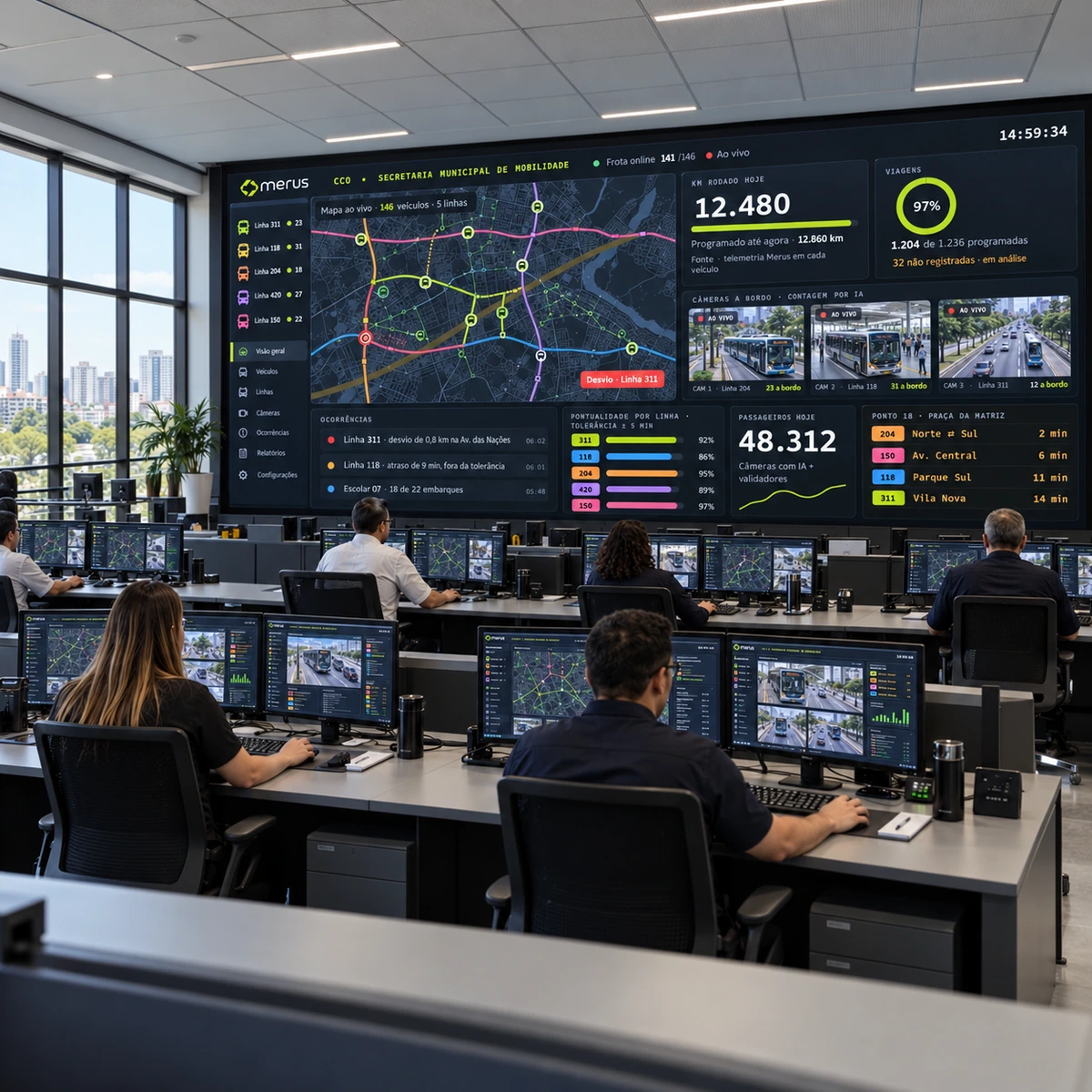
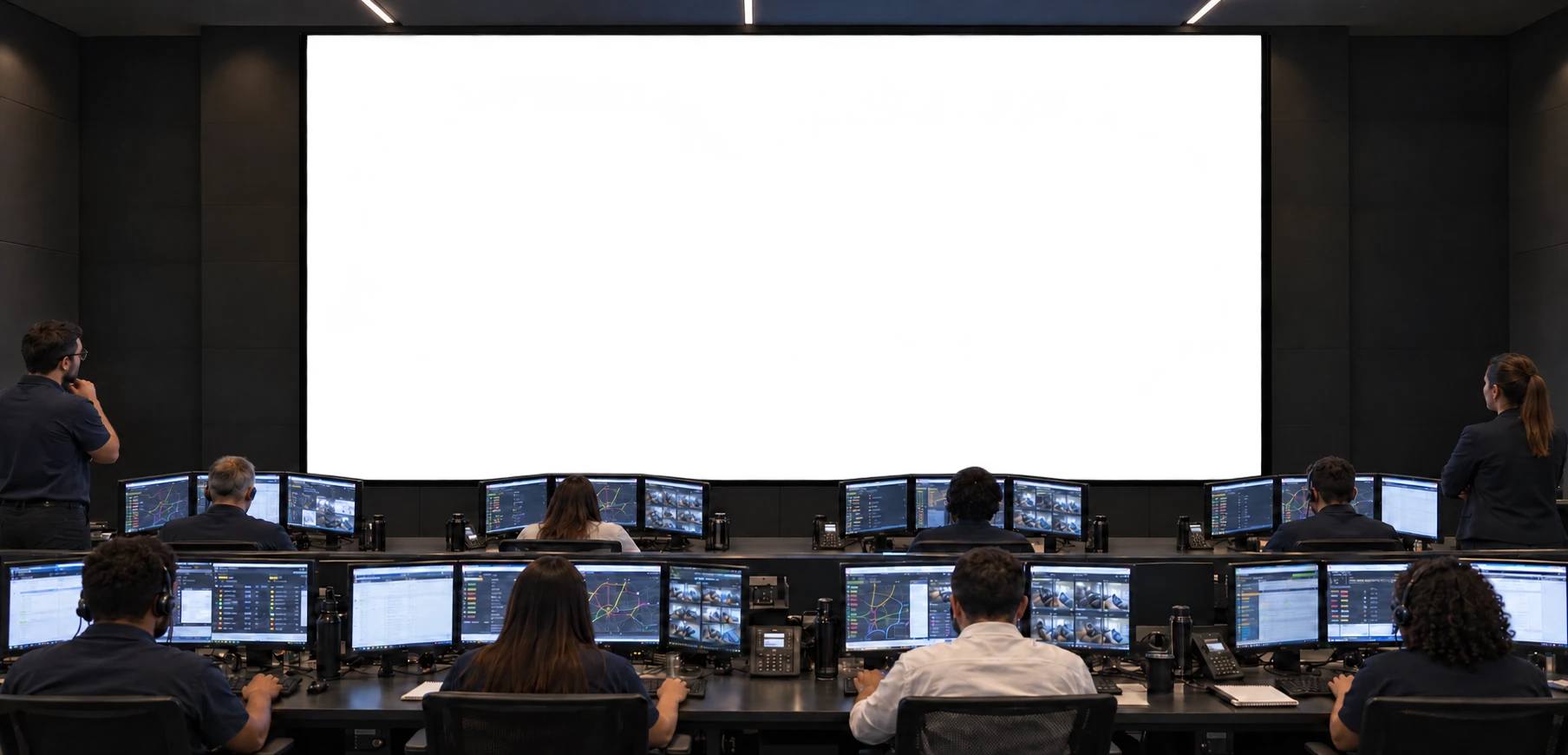
Read the storyMerus designs, supplies and installs the Operational Control Center: the LED wall, the workstations, the equipment on the buses and the platform that ties it all together. Those who decide on transport get to see the whole city, live.
Operation · real time 06:02:14 CCO · Municipal Mobility Department 128en route9delayed4stopped5no signal2off route OP 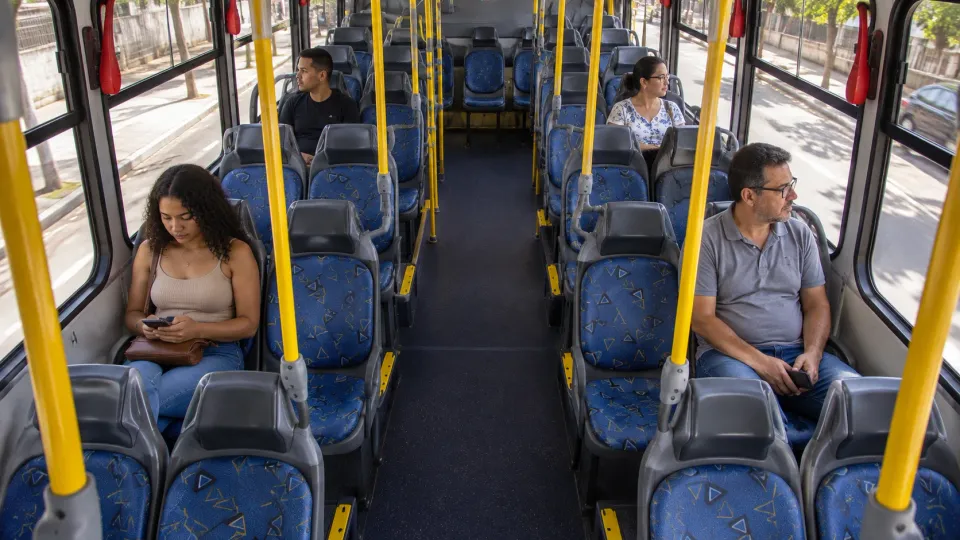 Live
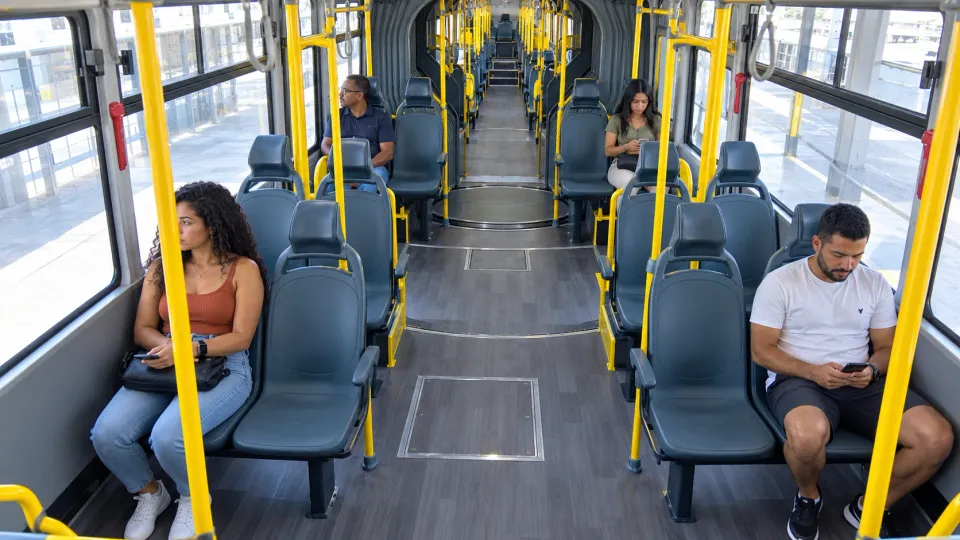 Live
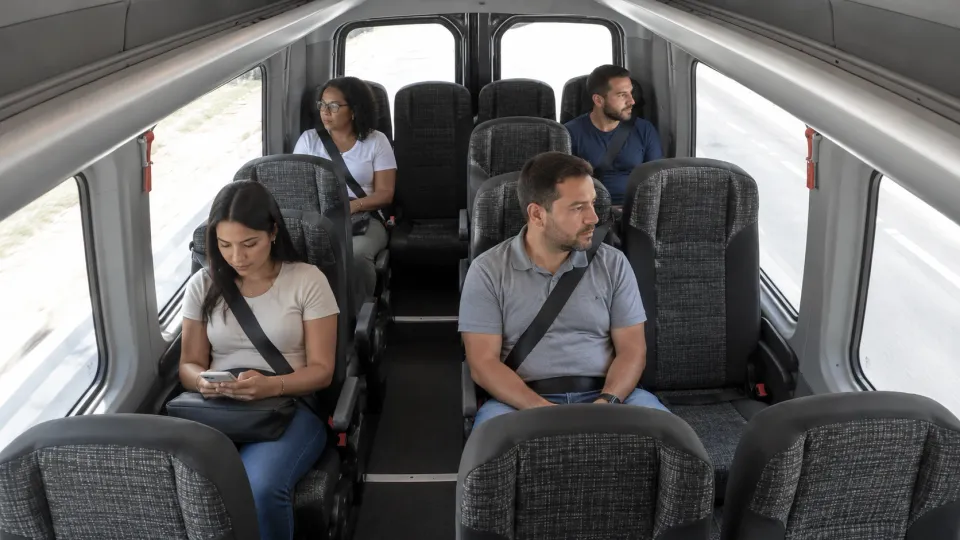 Live
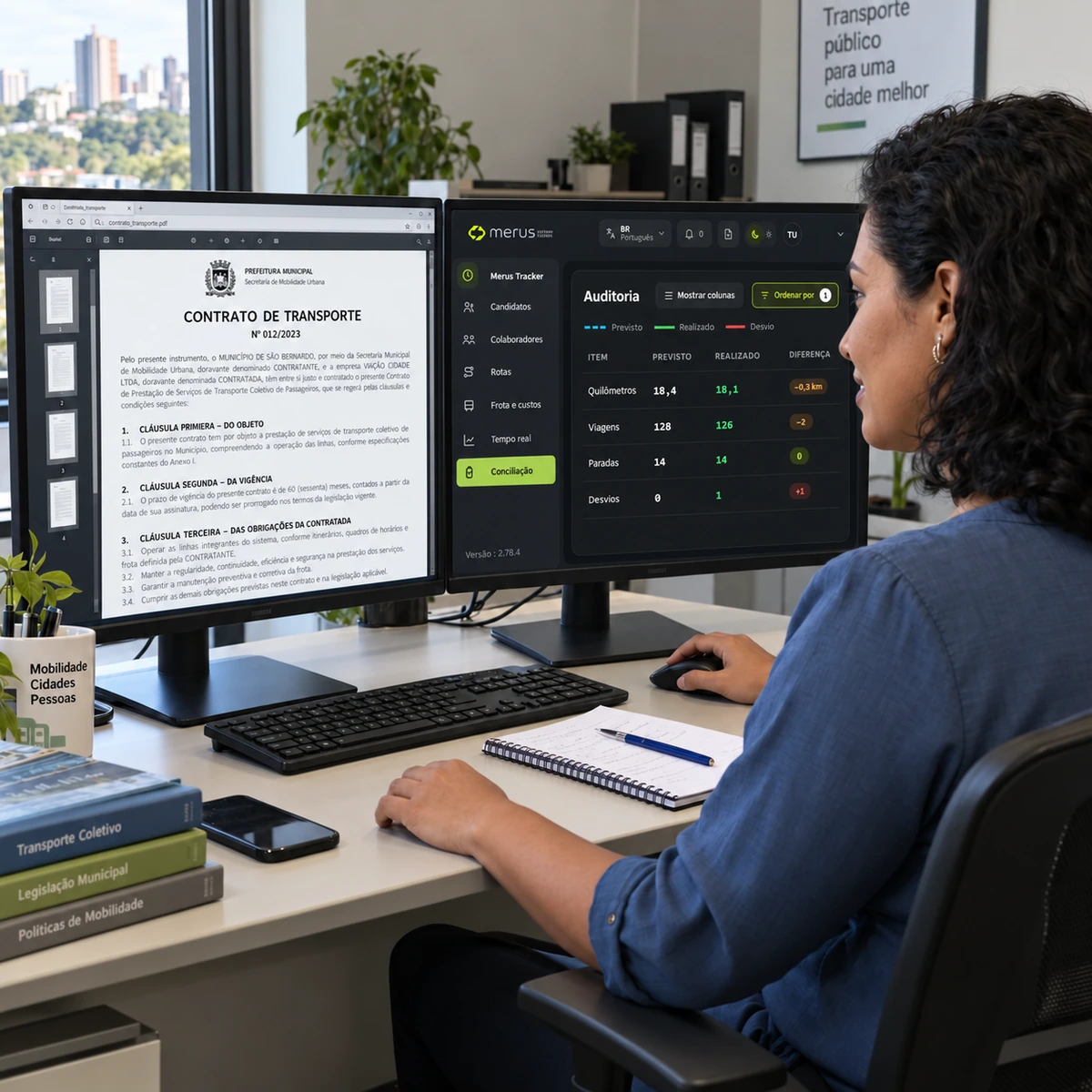
Attach the contract as it is. Merus AI reads the parameters, you approve each one, and from then on subsidy, penalties and scorecard are calculated automatically, trip by trip.
PlannedR$ 1,591,968.00
Calculated by MerusR$ 1,573,538.00
PDF, scanned or Word. Merus AI finds compensation, fleet, tolerances, penalties and targets, always next to the source clause.
No value enters the calculation without review. The manager confirms or corrects each parameter, and the decision is recorded with date and responsible party.
Kilometers, trips and delays measured in the operation go through the approved rules. The amount payable comes out with a reconciliation statement, trip by trip.
Five oversight jobs for public transport, done by the platform and always with a path back to the contract rule.
The route driven sits side by side with the scheduled one, by line, operator and period, with divergent segments highlighted.
Operation and oversight records are matched to find discrepancies before the month closes.
Rules for delays or incidents become deductions, with performance and contractual risk tracked by operator.
Compensation by fleet and mileage, with the contract's fares and penalties, consolidated into the amount for the period.
Validation and boarding events are associated with the corresponding line, vehicle and trip.
In a first 30-minute conversation, we identify the jurisdiction, the instrument and the decisions that need evidence.
Assess a public scenarioThe questions of those who contract, oversee and report on transport, answered by those who implement Merus.
 Merus teamImplementation · online
FAQ
Merus Tracker compares the contract schedule with the recorded execution of each trip: times, itinerary, mileage and fleet. Trips with no record, deviations and delays beyond tolerance appear with the position, time and source of each data point, so oversight can analyze them and record the decision.
Merus Tracker calculates mileage from the trips recorded by the project's sources, such as trackers and operator systems, and places it next to the scheduled mileage. Validation criteria follow the contract, and each difference keeps its origin and history.
Merus Tracker can support the calculation and review of compensation by applying the rules the contract defines, but there is no universal subsidy calculation. Rules, sources, validations and responsible parties are defined in each project, and the decision stays with the public body.
Merus Tracker keeps the history of each calculation: the rule applied, the origin of the data, the validations and the decisions, with date and responsible party. This record supports internal control and responses to oversight bodies; analysis and statements remain with the public body.
No. Merus Tracker organizes rules and operational data within the configured scope, but legal interpretation, jurisdiction, administrative decisions and compliance depend on the public body, the contract and the authorized officials.
Yes, in enabled flows. With Merus Tracker, citizens look up lines, schedules and the vehicle's predicted arrival. Accuracy depends on the equipment, connectivity and project configuration, and publication depends on the public body's authorization.
Merus Tracker records each student's individual boarding using the identification method planned in the project, linked to the trip and the vehicle. Purpose, access, retention and data protection are defined with the public body, in line with the LGPD.
It may be possible when there is a legitimate basis, authorized access, technical feasibility and quality. Merus Tracker has native integrations with the main telemetry hardware and assesses operators' systems, APIs and files; no specific integration is promised before that assessment.
In Merus Tracker, purpose, necessity, legal basis, roles, access, retention and security are defined for each scenario. The technology does not replace LGPD obligations or the assessment by the responsible public body.
Merus Tracker implementation starts with a diagnosis: jurisdiction, contractual instrument, decisions that need evidence, available sources and responsible parties. Then come sources and equipment, configuration and loading, validation with oversight and internal control, and support until the system is 100% functional.