
Choose language: Português Choose language: Español Choose language: English
Talk to us
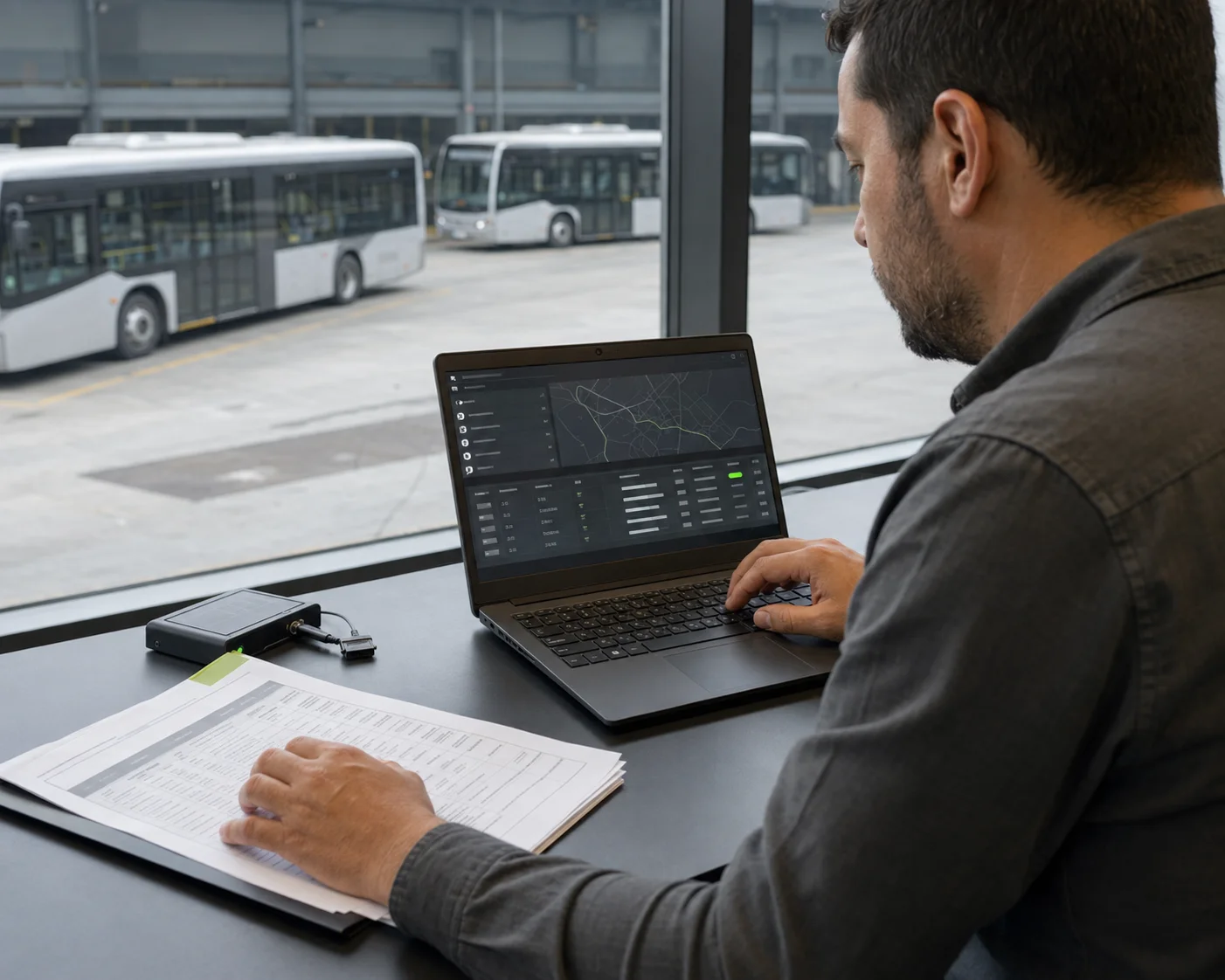
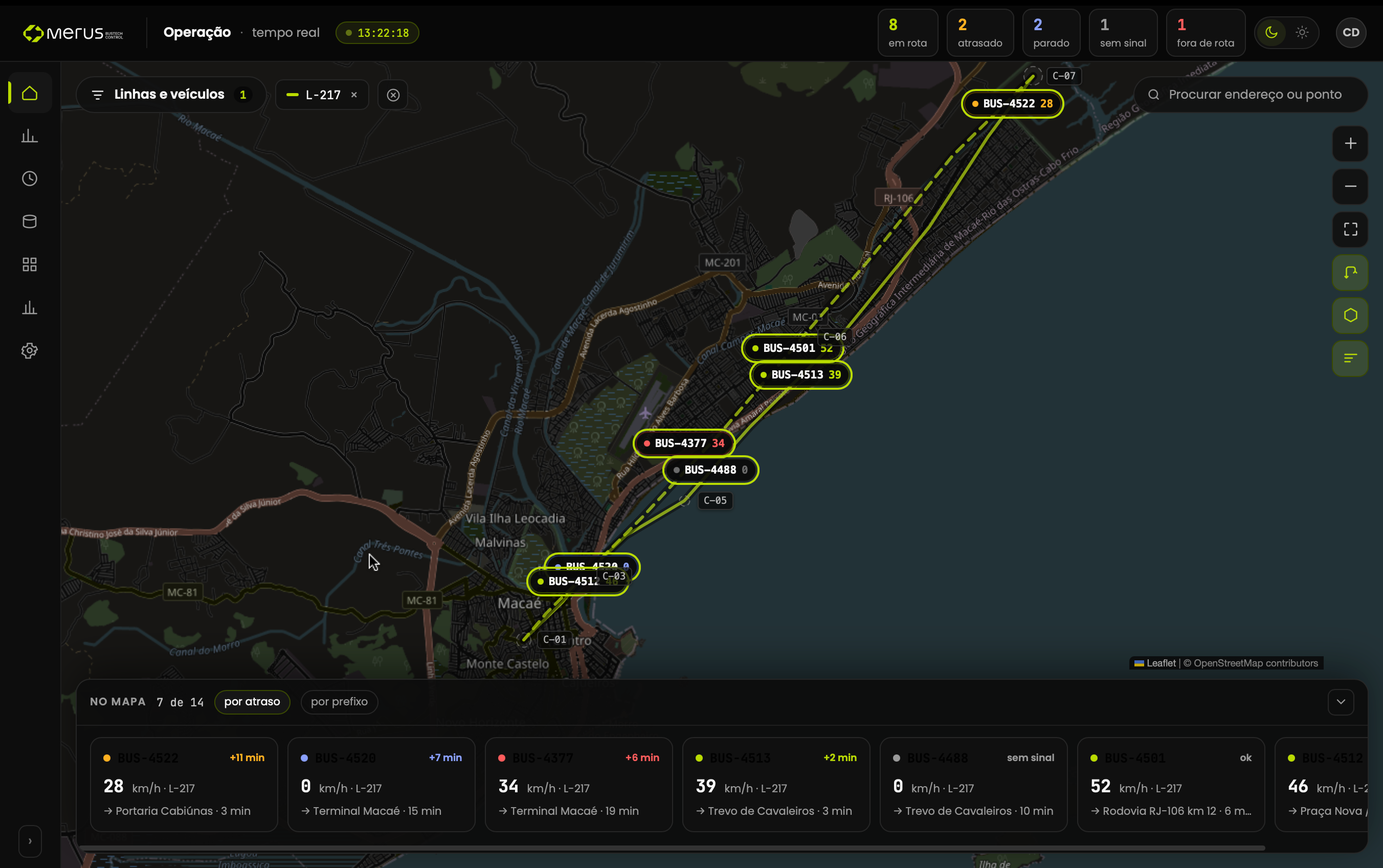
Merus Tracker screen with a real-time operations map, vehicles and trip status.

Each trip brings the whole operation together.

Understand the flow

Merus connects data, people and contracts to show how passenger transport really happens, from the planned trip to the recorded evidence.

A layer of intelligence for passenger transport.

Merus Tracker is an operational control and governance platform. It brings together planning, vehicle, passenger and contract information, relates each event to its trip and creates a common foundation for monitoring, decision-making, transparency and auditing.

It is not just tracking: it is a reading of the operation organized around the service that was contracted and delivered.

  1. 01 · Planned

    What should happen

    • Routes and stops
    • Schedules
    • Capacity and rules
  2. 02 · Executed

    What happened

    • Trips
    • Boardings
    • Events and alerts
  3. 03 · Evidence

    What can be proven

    • History
    • Discrepancies
    • Reports

How it works, in six steps.

From plan to evidence, each step feeds the next. Choose a step to see what goes in and what comes out.

01 / 06

Plan

Define the operation's reference: demand, routes, stops, schedules, capacity, estimated cost and comfort.

In
  • People and addresses
  • Shifts and sites
  • Contract rules
Out
  • Routes and stops
  • Schedules and capacity
  • Estimated cost of the scenario

Data makes sense when it meets the trip.

Merus works as a hub that correlates sources from the perspective of the trip actually made. The same evidence can serve operations, HR, finance, oversight and control, according to the rules of each project.

  • Planning and contracts Routes, schedules, rules
  • GPS and AVL Position and times
  • Telemetry and cameras Onboard events
  • Validators and fare collection Boardings and attendance
  • HR, ERP and public systems People and contracts
Trip
  • Vehicle
  • Route
  • Passenger
  • Event
  • Contract
  • Operations and performance Punctuality, occupancy
  • Passenger experience Lines, ETA, notices
  • Planned × actual Differences by trip
  • Transparency and auditing Contract and evidence

One trip, many questions answered.

Each moment of the trip raises different questions. The platform keeps the answer in the same place.

  1. 01 · Before departure

    What was the route, the schedule, the capacity and the planned obligation?

    Merus shows
    • Route
    • Schedule
    • Vehicle
    • Capacity
  2. 02 · During execution

    Where is the vehicle, what alerts have come up and when should it arrive?

    Merus shows
    • Location
    • Alerts
    • ETA
  3. 03 · At boarding

    Who was served, at which stop and by what identification method?

    Merus shows
    • Who
    • Where
    • Identification
  4. 04 · At closing

    What was delivered, which discrepancies remain and what evidence supports the review?

    Merus shows
    • Delivered
    • Discrepancies
    • Evidence

What the platform delivers at each step.

The capabilities below rest on the same foundation of trips. Each project enables what its sources, equipment and rules allow.

01

Routing

Calculates stops, route and schedules from addresses, shifts, capacity and rules.

02

Occupancy and punctuality

Organizes operational indicators to compare fleet, cost and service, without promising results on its own.

03

Planned versus actual

Compares the schedule with the recorded execution at the unit of the trip.

04

Reconciliation

Supports operational and contractual review when rules and sources are part of the scope.

05

ETA for the passenger

An arrival reference in flows where the capability is enabled.

06

Boardings

Relates attendance or boarding to the passenger and the trip, depending on the implementation.

Integration

Integration without starting from zero.

Merus can use equipment and systems that already produce data. A technical assessment identifies sources, owners, frequency, quality and rules; equipment, protocols and levels of automation are defined and validated in each project.

  • 01Origin and format
  • 02Quality and frequency
  • 03Security and responsible parties
  • 04Rule for associating with the trip

There is no universal connector or published timeline: each scenario goes through technical validation before implementation.

Frequently asked questions

Do I need to replace trackers, cameras or validators?

Usually not. Merus can use the data that already exists when integration is technically feasible, with sufficient quality, a defined purpose and agreed responsibilities.

How is the information organized?

Events are linked to the corresponding trip. This way, planning, vehicle, passenger, execution and evidence can be consulted in the same context.

Are all integrations already ready?

There is no promise of universal integration. Each project validates sources, formats, interfaces, frequency, quality, security and responsibilities before implementation.

Does Merus serve companies and the public sector in the same way?

The technical foundation is shared, but the applications change. In corporate charter transport the focus is on people and business; in the public sector, on contracts, oversight and transparency.

What data does the platform need to receive?

The data depends on the goal and scope. Planning, tracking, telemetry, boardings, fare collection and corporate or public systems are possible classes; no source is assumed to be available before the diagnosis.

Does the platform require a specific device?

The site does not establish a mandatory device. Equipment and identification methods are assessed according to the rules and sources of each project.

How does implementation work?

The initial conversation identifies the goal, sources and responsible parties; the technical scope defines configuration, integration, validation and operation. Timelines are not published because they depend on the scenario and still require commercial confirmation.

How are security and privacy requirements assessed?

Hosting, access, retention, responsibilities and controls must be answered in the context of the project. The security page records only verified principles and offers a specific subject for questionnaires.

Content updated on October 15, 2026.

Talk about
your operation.

Talk to Merus

How would you like to continue?